
Hedwig
From a budgeting app to a financial operating system for independent workers
- hedwig.riftlabs.xyz
- Rift Labs
- 2026
- Figma, Cursor, Opencode
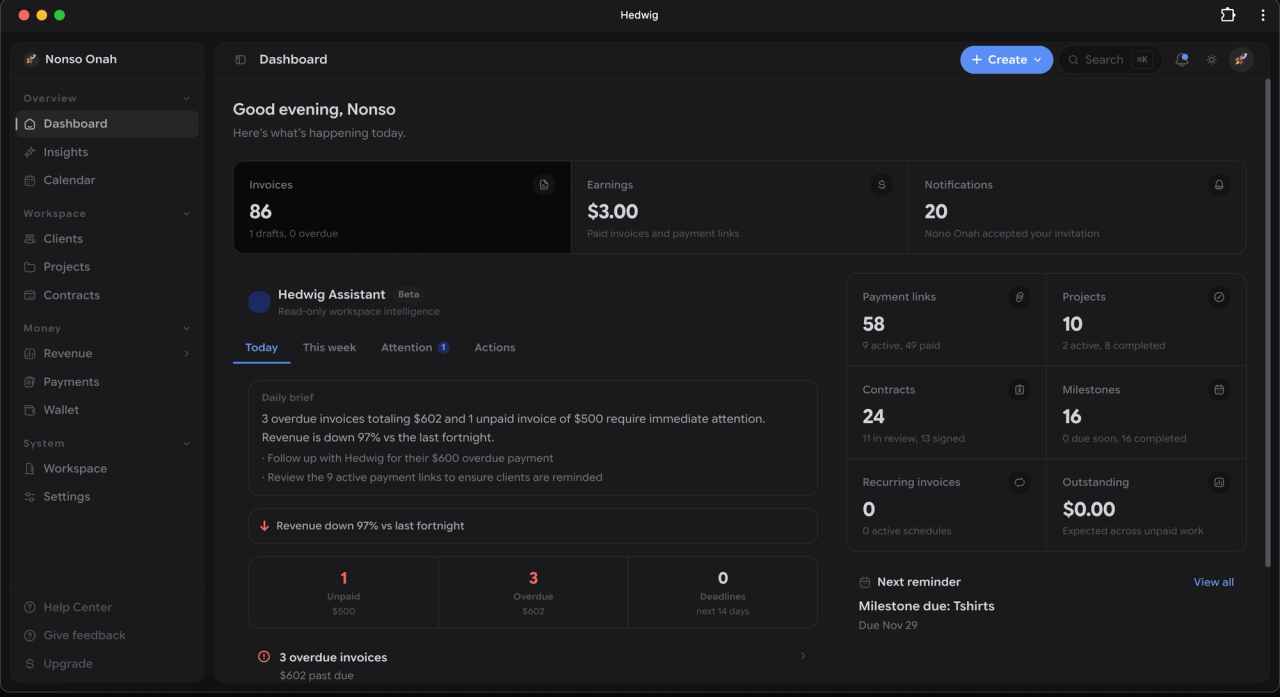
Hedwig is a financial and work management platform I founded and built for freelancers, creators, remote workers, and now small businesses.
It didn't start out that way.
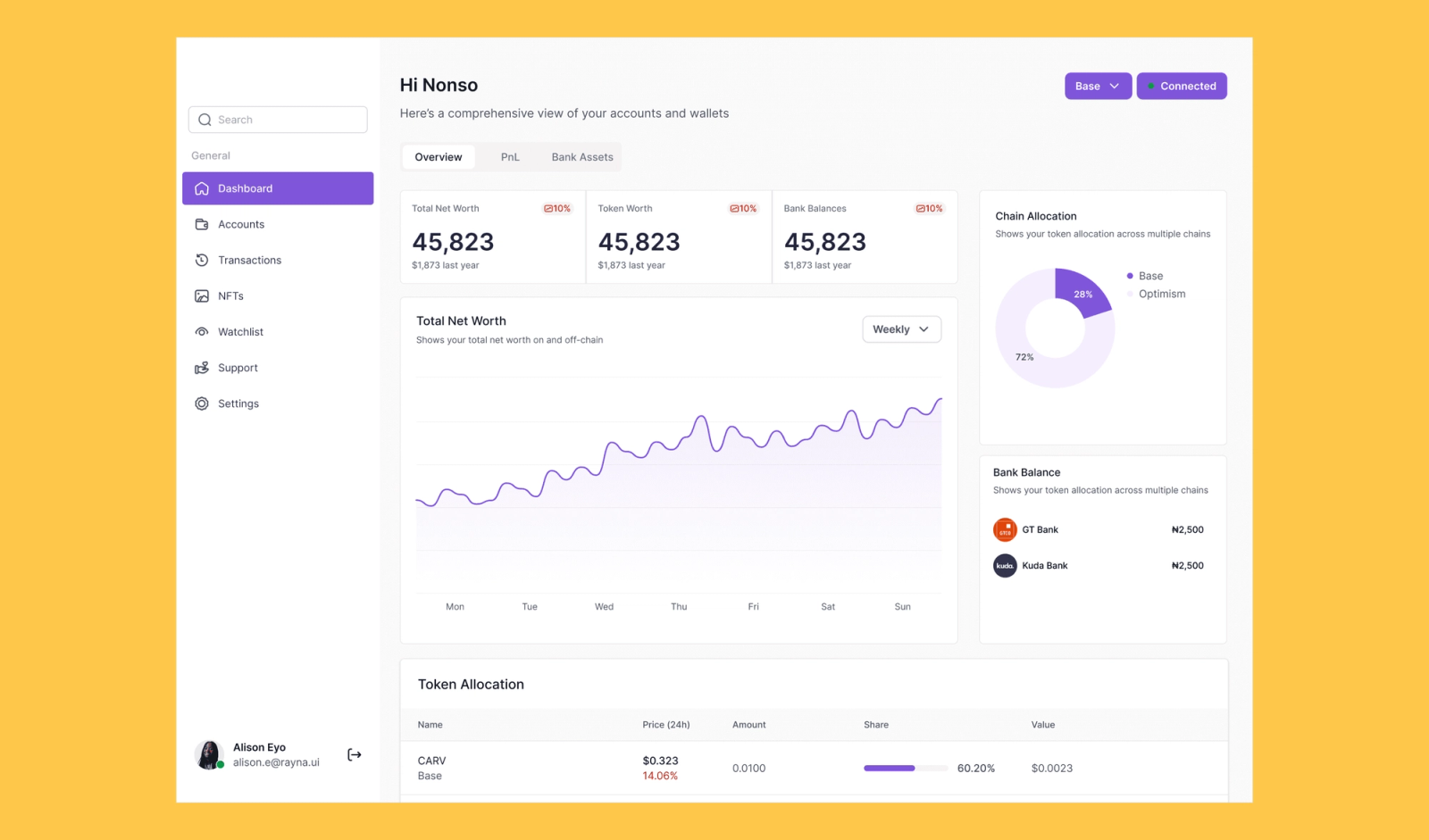
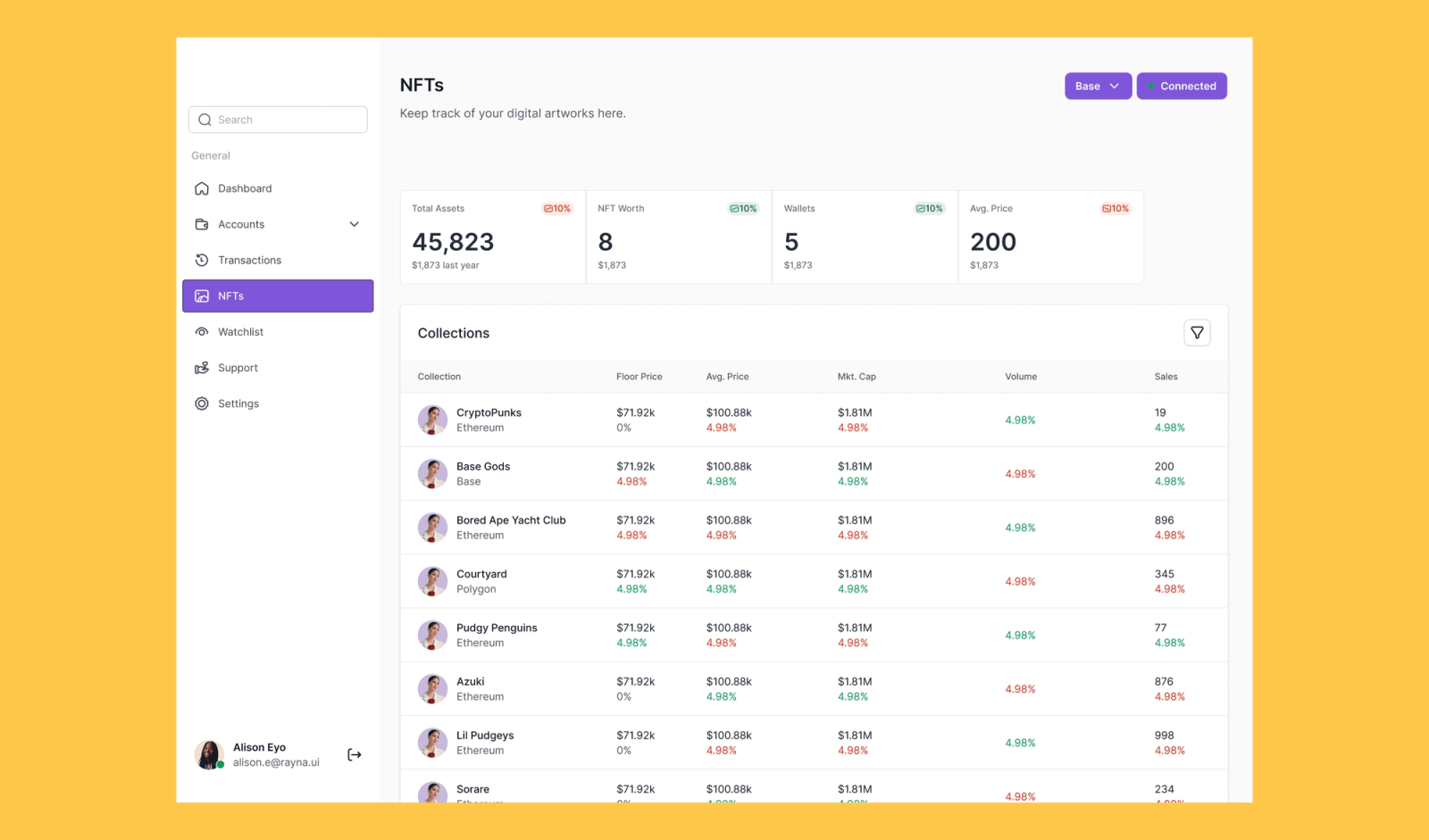
Before Hedwig, it was a web3 portfolio tracker
The earliest version was a portfolio tracker for web3 users, a way to see your on-chain assets and activity in one place. These are actually the designs I still have on hand, so this is a stage I can show properly rather than just describe.
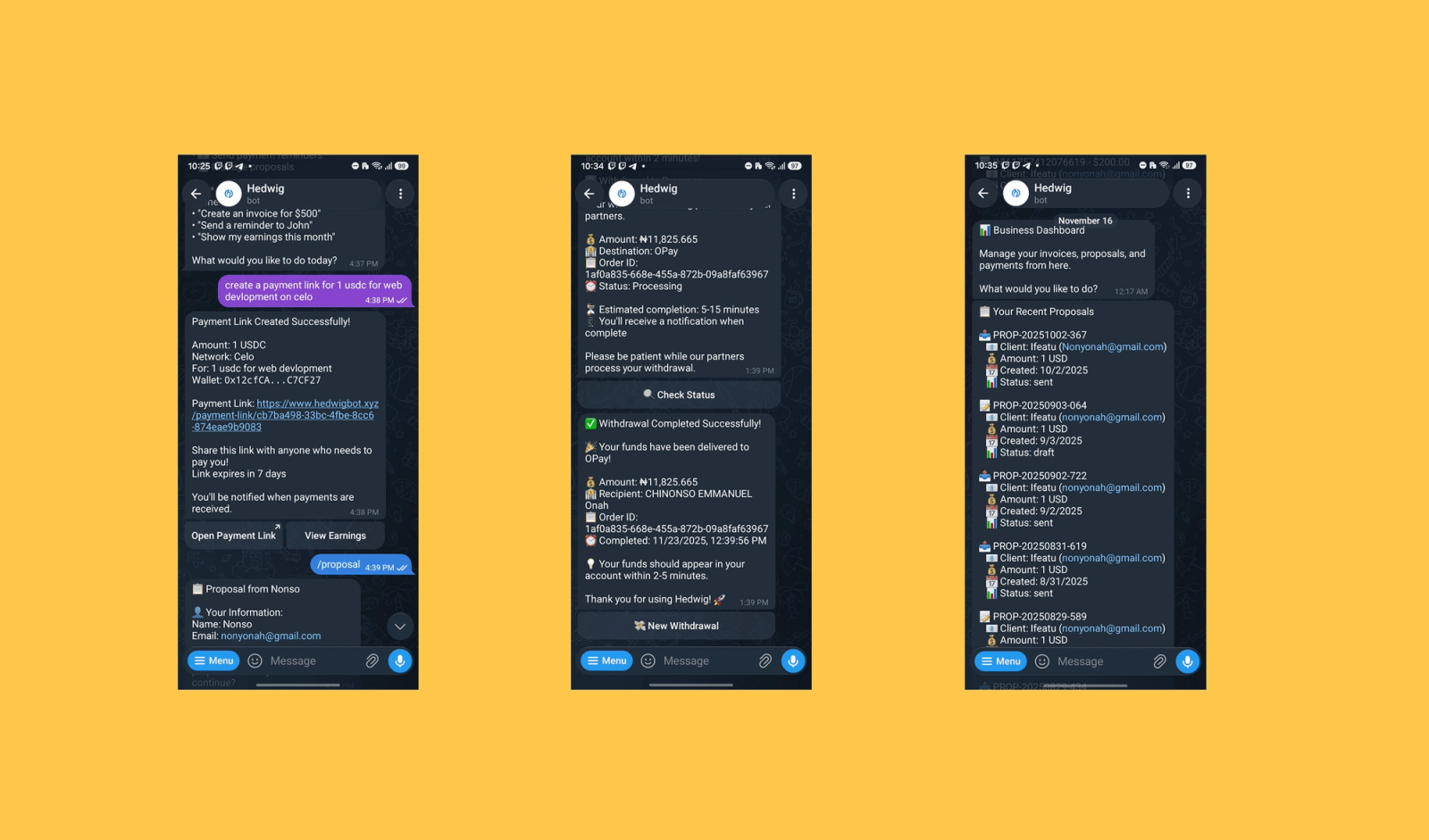
It also became a telegram bot
Somewhere in that same stretch, Hedwig also pivoted into a Telegram bot built for freelancers to generate invoices and payment links. That project got picked up by Base West Africa, and it's what led to Hedwig winning a Coinbase Developer Platform grant, plus grants from WalletConnect and Celo. That early recognition and funding is what gave me the room to keep building.
AI assistant first, then dashboard first
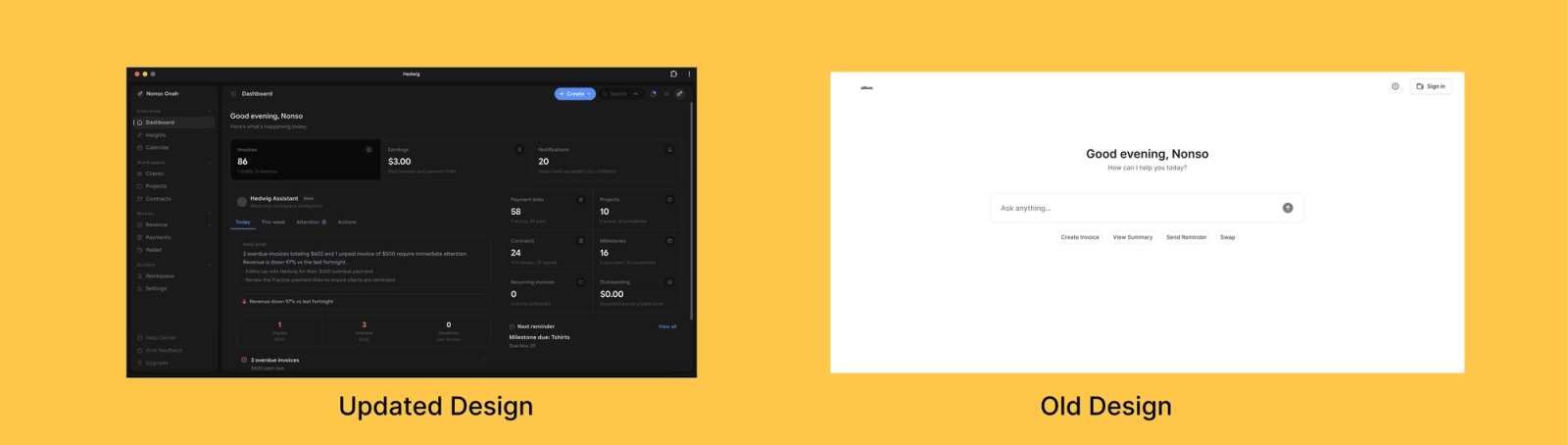
An early version of Hedwig was heavily conversational, tell it what you want, let it do the work. Ask it to create an invoice instead of clicking through forms.
It felt exciting, but using it myself, I noticed the problem: conversation can't be the whole interface. An AI assistant answers questions, it doesn't tell you a contract's expiring tomorrow or a client hasn't paid. I was making the product reactive when it needed to be proactive.
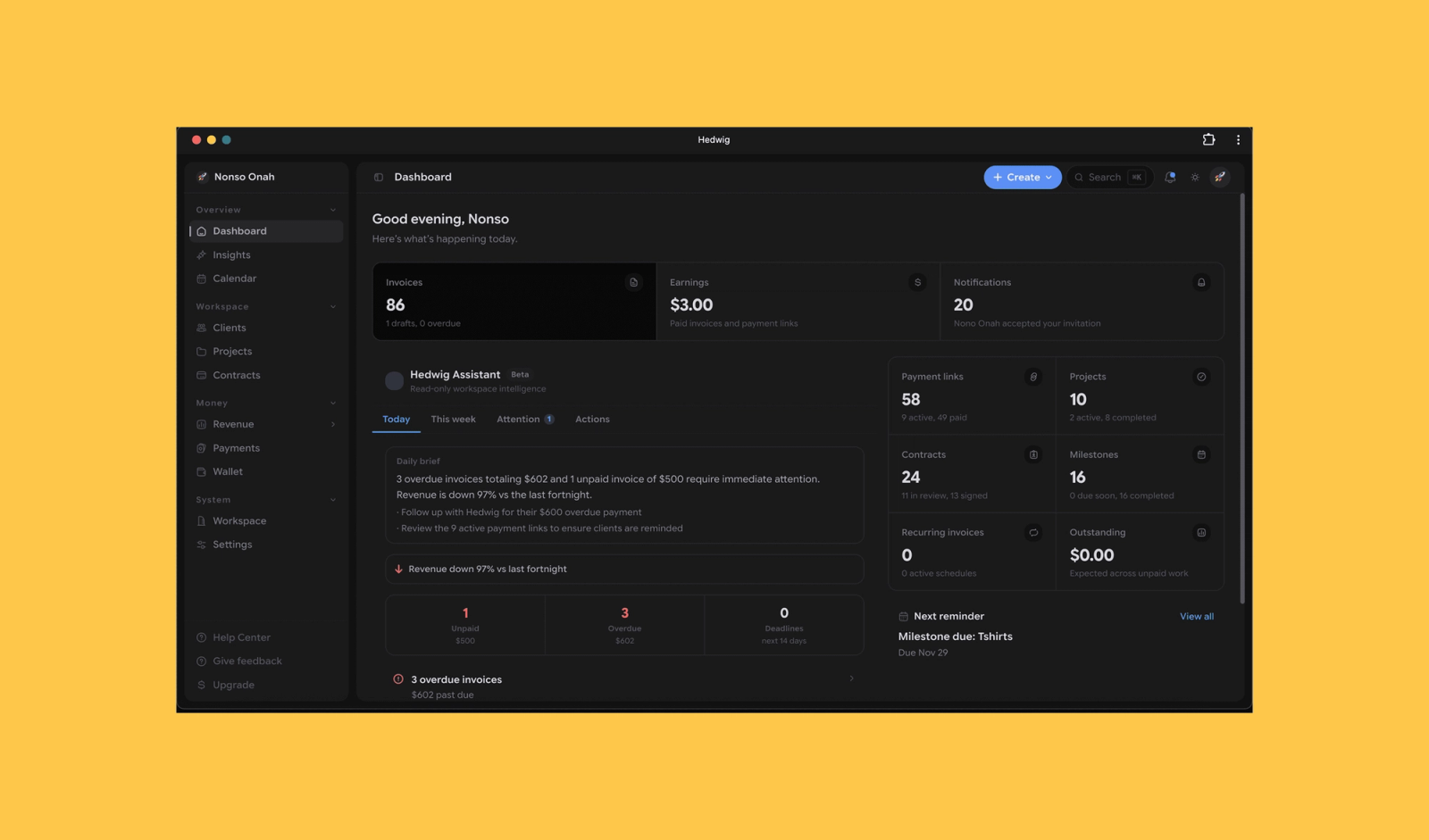
So I redesigned the home experience around a dashboard: deadlines, reminders, payment status, all visible immediately. AI didn't disappear, it just moved to a more appropriate role. You could still talk to Hedwig, you just didn't have to.
AI should reduce friction, not become friction.
The wallet became a financial hub
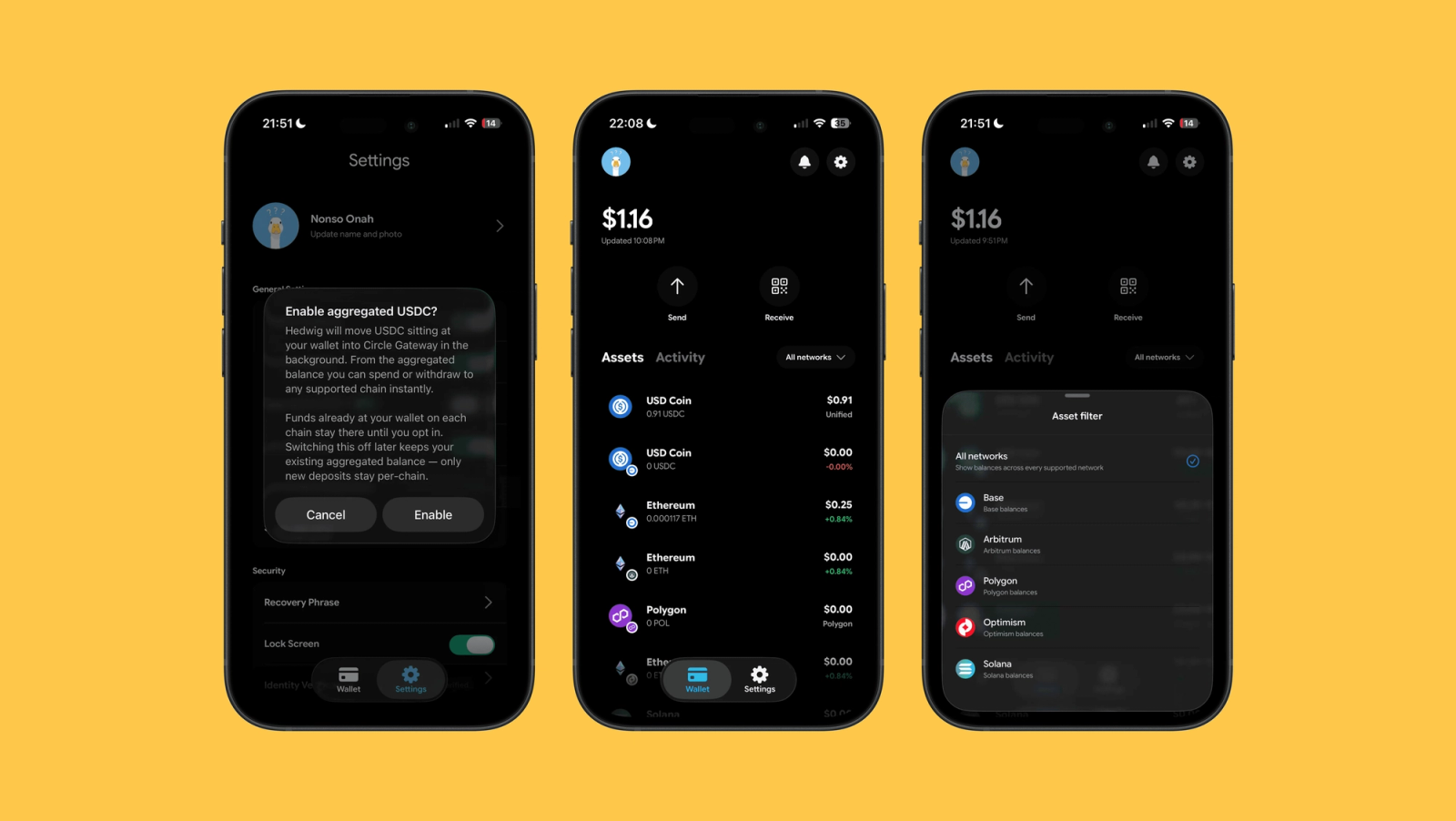
The wallet started as a simple modal address, token balances. That worked when Hedwig was mostly thinking about crypto. Once I added fiat accounts, stablecoins, and off-ramping, it needed to become a real financial hub instead of a crypto balance screen.
That also meant dealing with things a normal design exercise doesn't have: KYC, compliance, different providers, countries, currencies. Adding USD virtual accounts wasn't just "design another screen"; provider and KYC requirements shaped the actual experience directly.
In fintech, the UX is often shaped by infrastructure you don't control.
Making mobile feel like mobile
Early versions of the app felt like a website running inside a phone. I moved the interface toward native patterns, navigation, bottom sheets, tabs. I also found problems only real use surfaces: Android navigation was flat-out broken while iOS worked fine, and I couldn't fix it properly without holding an Android device. So I got one and rebuilt it.
As features piled up, the app's "More" tab also turned into a dumping ground: too many destinations, no hierarchy. I looked at how apps like Teams and X split primary vs secondary navigation and moved to bottom nav for core actions plus a drawer for the rest.
From freelancers to teams
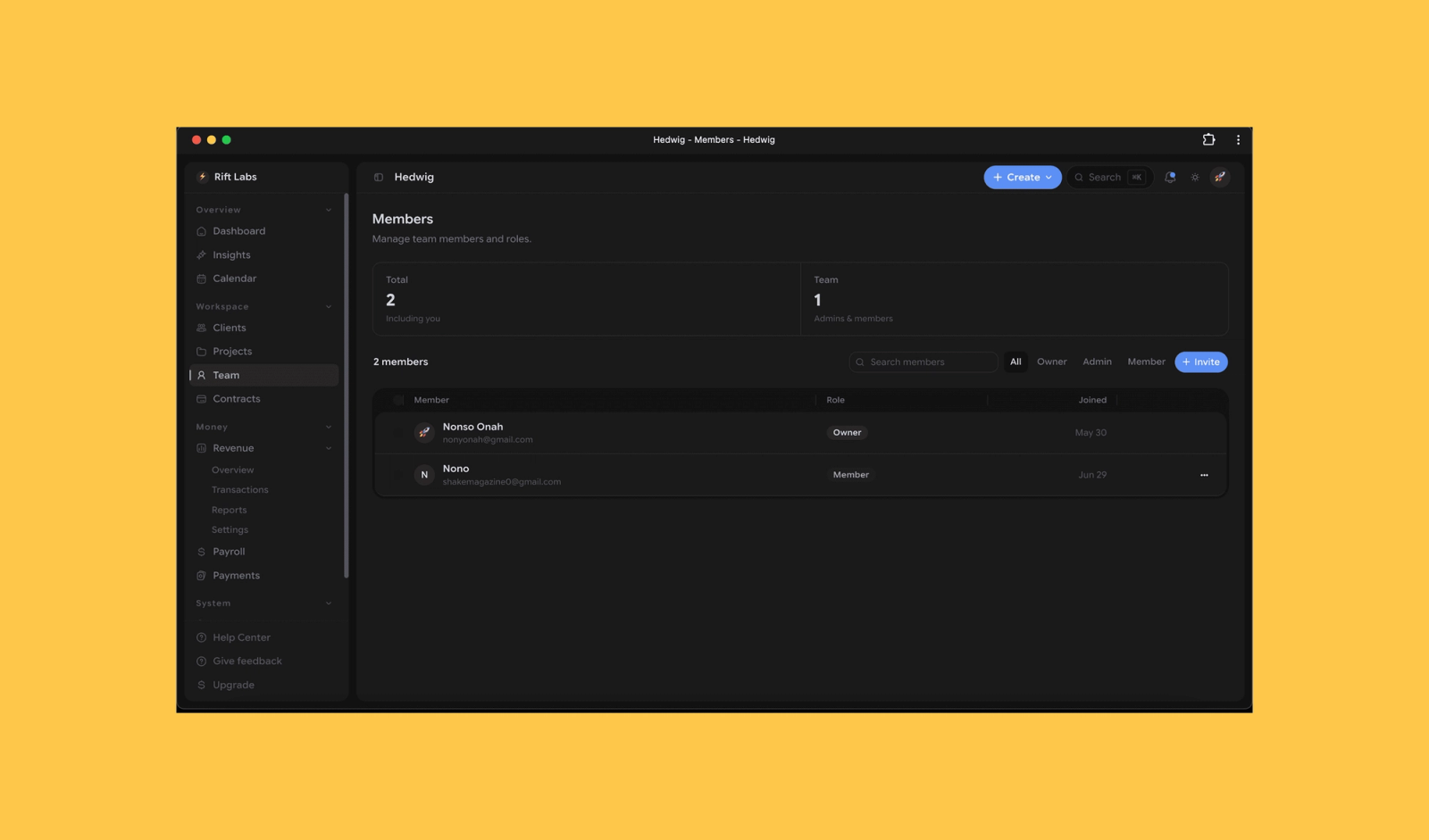
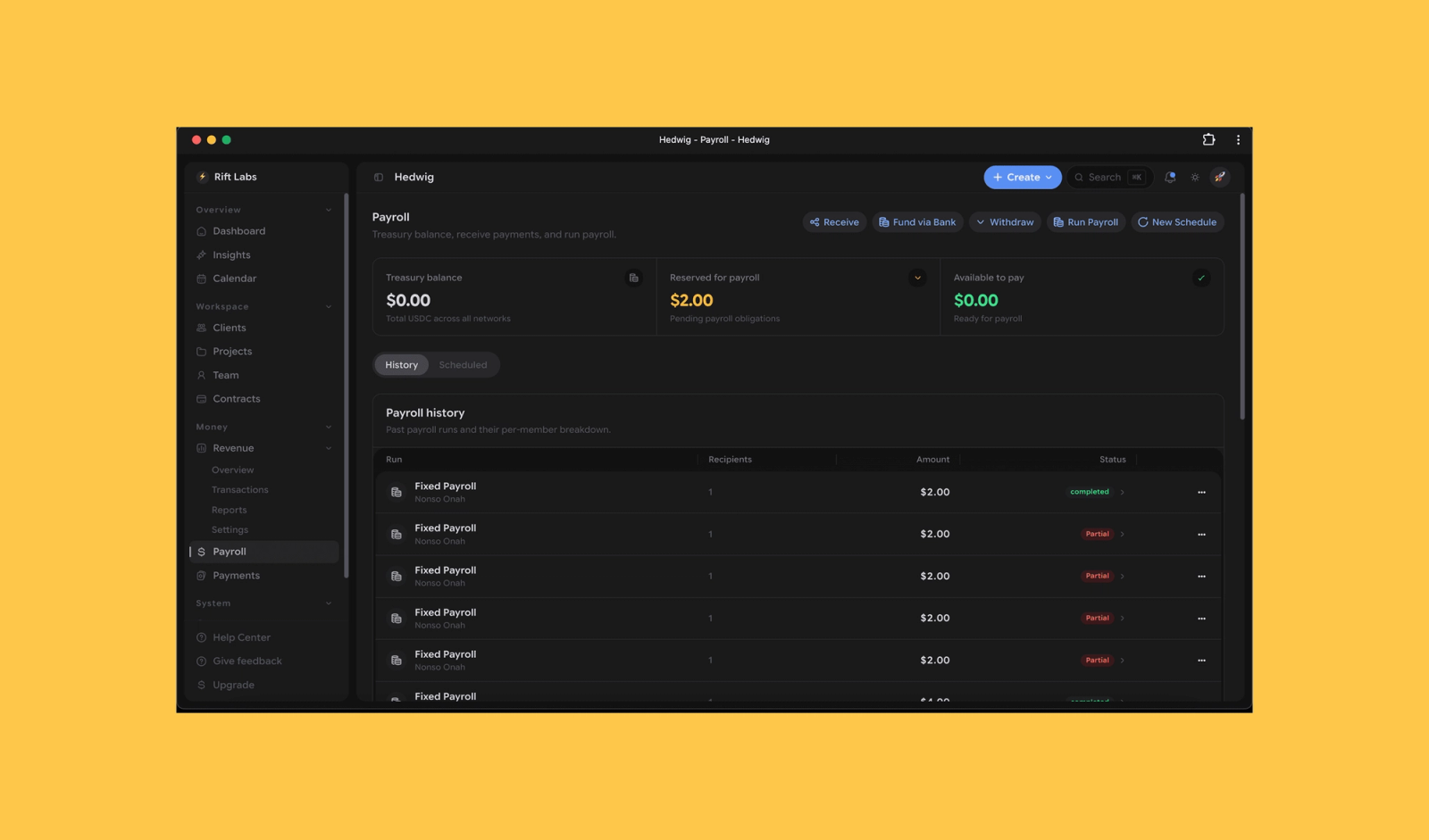
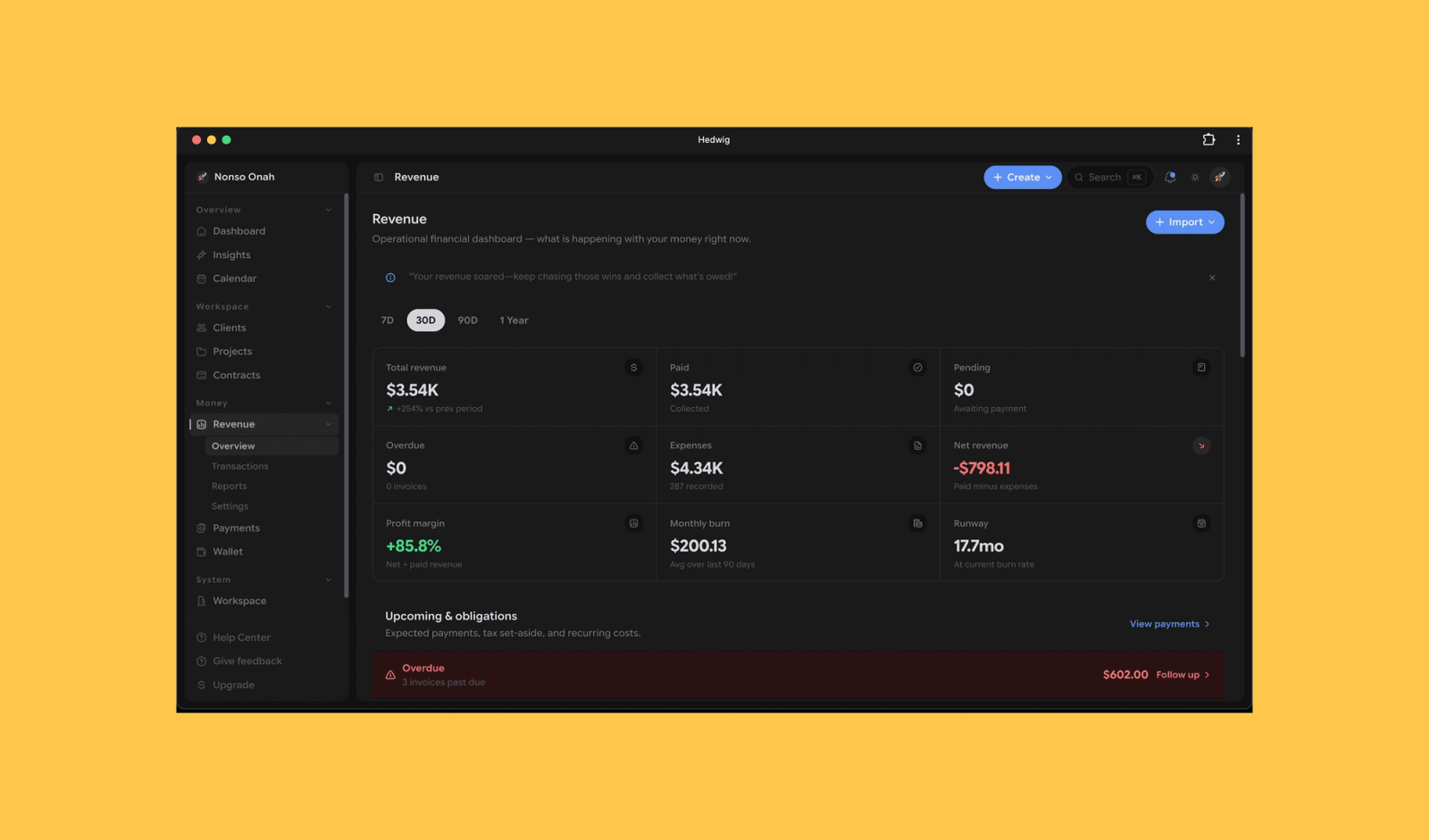
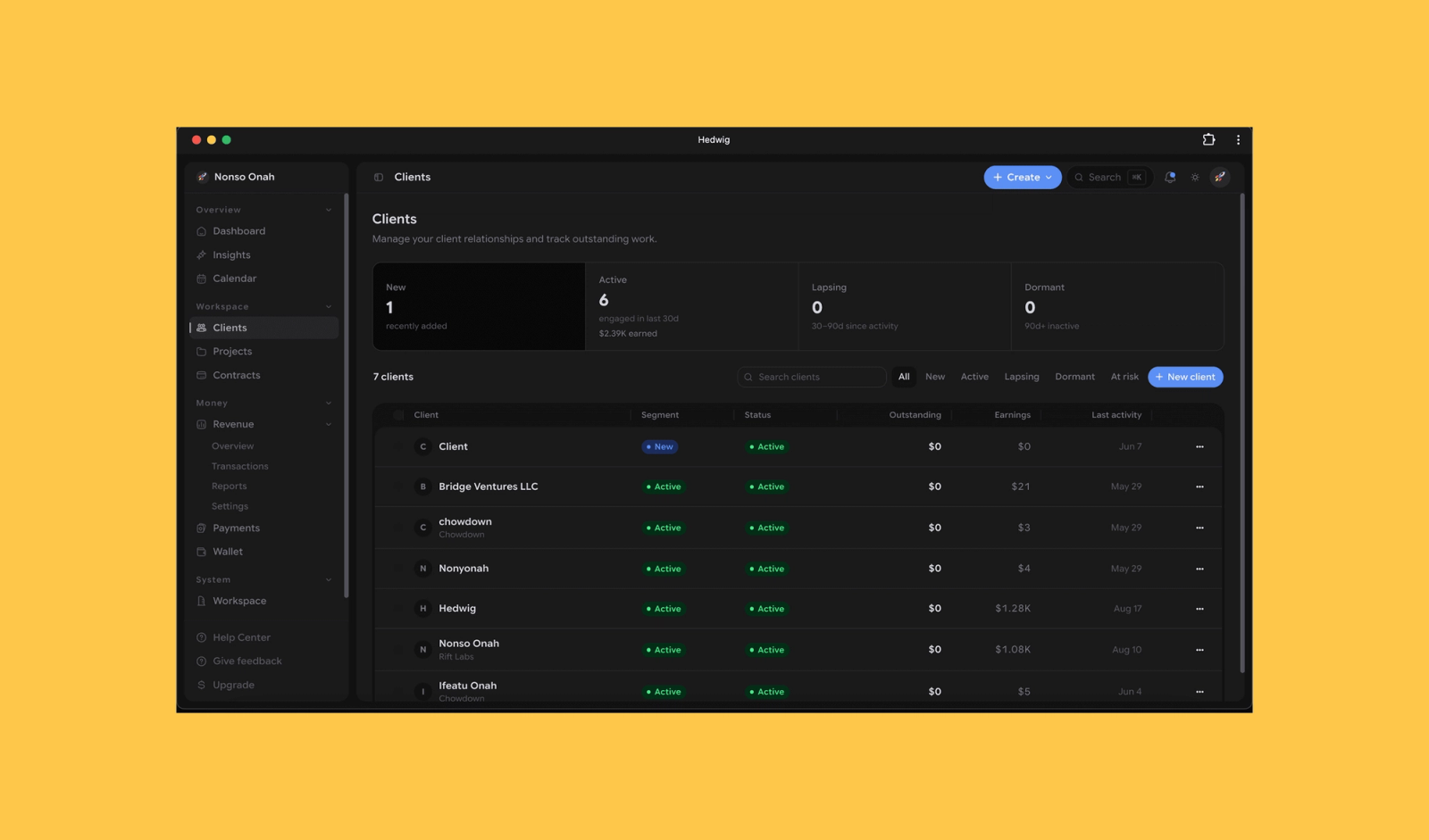
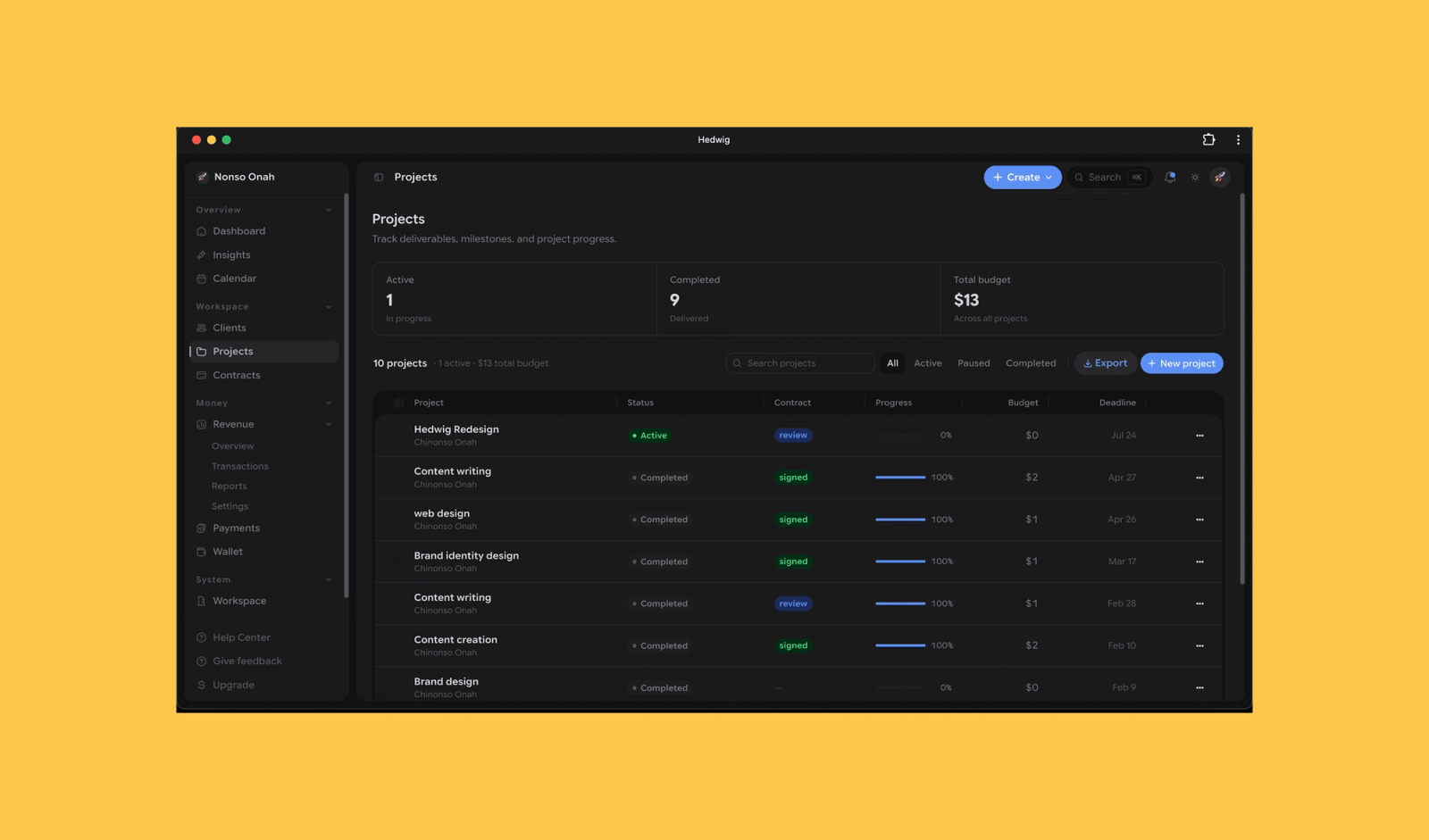
The more I talked to users, the more I saw the same problems at agency and small-business scale, clients, projects, people to pay, money moving between accounts. So Hedwig expanded into workspaces: managing clients and projects as a team, plus treasury wallets and automated payouts. Hedwig stopped being just a freelancer tool and became infrastructure for how small teams manage work and money together.
By this point it was touching a lot of systems at once, bank accounts, crypto wallets, stablecoins, off-ramps, KYC, multiple chains, which gave me a rule I keep coming back to:
The user shouldn't have to understand the infrastructure to use the product.
Building with AI changed my process
Most of my earlier design work happened in Figma. Now I move directly between product thinking, design, AI-assisted development, and the live product. I use AI heavily to build, but I don't take whatever it gives me, AI-generated interfaces tend to look the same. So my job became: define the product, set the direction, build, critique, iterate. AI made implementation faster, it didn't remove the need for design judgment, if anything it made that judgment matter more.
What didn't work
I built features before I had evidence people needed them. I struggled with onboarding and activation. I learned that getting users and keeping users are completely different problems. At some point I realized building wasn't my biggest problem, getting people to care was. That changed how I think about distribution.
Where Hedwig is now
Hedwig is still moving toward a full financial operating system for independent workers and small teams, sitting across two connected worlds:
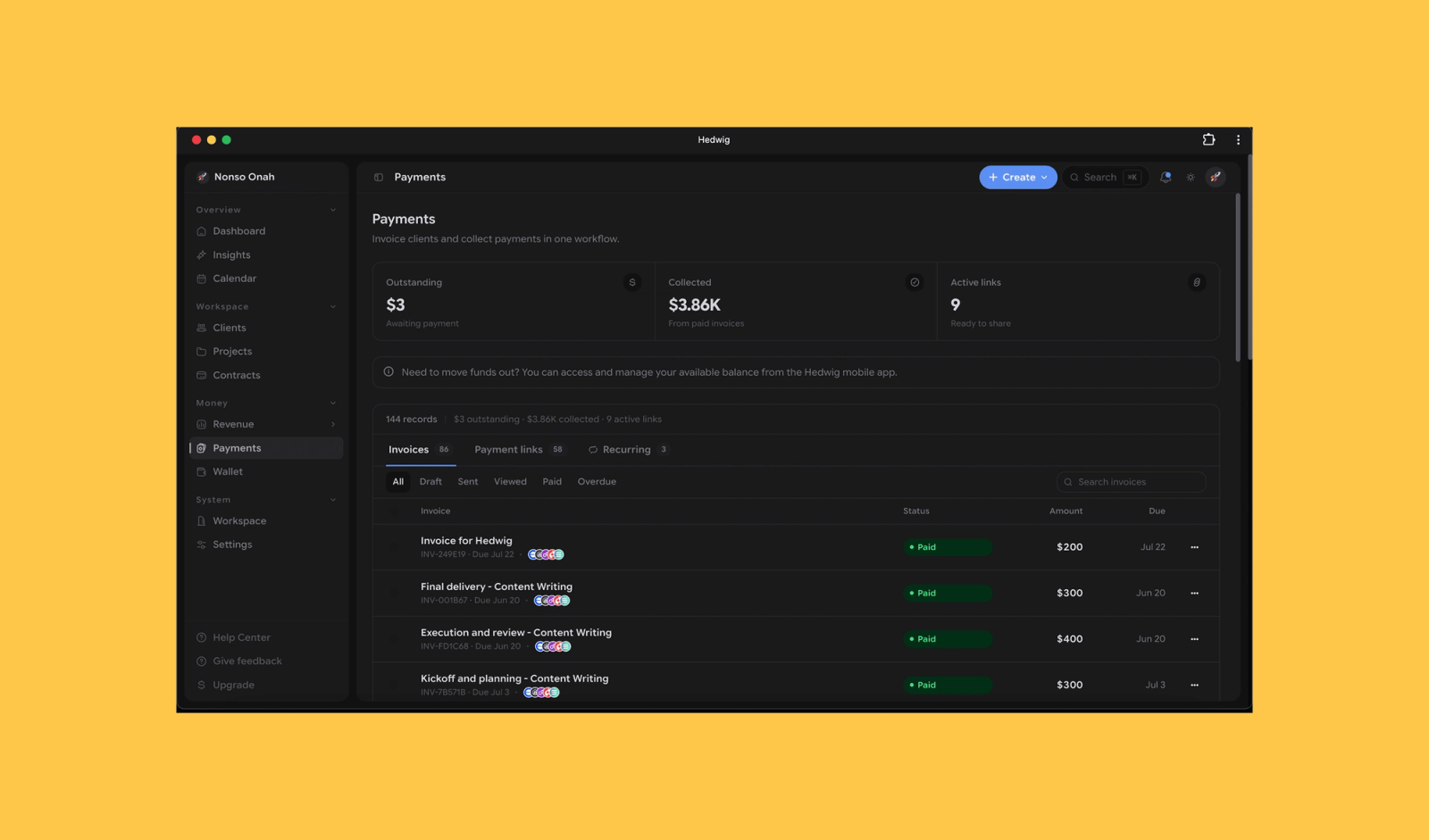
Work: clients, projects, tasks, invoices, payments, collaboration.
Money: wallets, bank accounts, stablecoins, virtual accounts, transfers, payouts.
The work creates the money. Hedwig helps manage both.
What I learned
Don't confuse the first problem with the real one. Albus started with budgeting, the real problem was much bigger. AI shouldn't dictate the interface, sometimes the best AI decision is knowing when not to make the user talk to it. Design is constrained by reality, compliance, infrastructure, and economics shape the UX as much as taste does. Shipping changes how you design. Once real people use the thing, empty states and errors and trust all start to matter. And the best decisions are usually the ones I didn't plan for. Hedwig is what it is because I kept changing my mind as reality gave me new information.
I've documented the fuller pivot-by-pivot story in my Founder's Logs, if you want the why behind these decisions and not just the what.